Why Brake Maintenance Matters

December 11, 2024

Stay Safe on the Road with Proper Brake Care
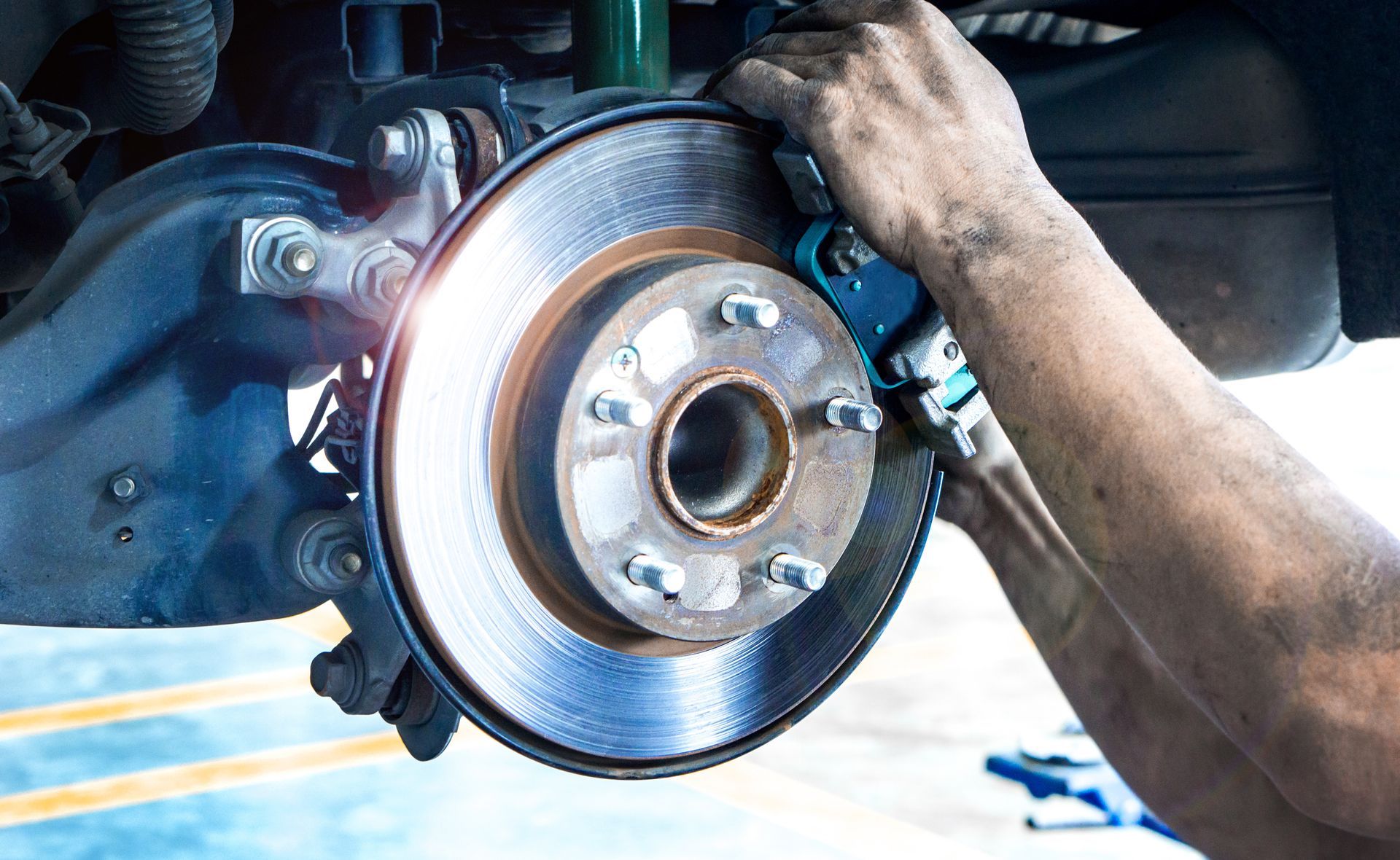
Brakes are one of the most critical components of your vehicle, directly affecting your safety and that of others on the road. At Automotive Workbench in Aiken, SC, we prioritize the importance of maintaining a reliable braking system. Regular brake inspections and timely repairs not only ensure your safety but also enhance the overall performance of your vehicle. Here, we break down why brake maintenance matters and how you can keep your system in top shape.


1. Brakes Are Your Primary Safety System

Your brakes are responsible for slowing down and stopping your vehicle in all driving conditions. Over time, wear and tear on components like brake pads, rotors, and calipers can reduce their efficiency. At Automotive Workbench, our ASE-certified technicians provide expert brake services to ensure your system is always performing at its best, giving you peace of mind on every journey.


2. Signs of Brake Trouble

Understanding the signs of brake trouble can prevent serious issues. Common symptoms include squealing or grinding noises, a spongy brake pedal, or vibrations when stopping. If you notice any of these, it’s crucial to have your brakes inspected immediately. At Automotive Workbench in Aiken, we use advanced diagnostic tools to identify and fix brake problems quickly and efficiently.


3. Regular Maintenance Extends Brake Life

Routine brake maintenance, such as pad replacements and fluid checks, can significantly extend the lifespan of your braking system. This not only saves you money in the long run but also ensures consistent stopping power. At Automotive Workbench, we offer comprehensive brake services to help you maintain your system and avoid costly repairs.


4. The Impact of Aiken’s Driving Conditions

Driving conditions in Aiken, SC, can take a toll on your brakes, especially if you frequently navigate stop-and-go traffic or hilly terrain. Regular inspections and maintenance are essential to keep your system in optimal condition. Our team at Automotive Workbench understands the unique challenges Aiken drivers face and provides tailored solutions to meet your needs.


5. Don’t Overlook Brake Fluid

Brake fluid plays a crucial role in transferring force from your pedal to the braking system. Over time, moisture can accumulate in the fluid, reducing its effectiveness. Regular brake fluid checks and flushes are key to maintaining your system’s reliability. Automotive Workbench offers expert brake fluid services to keep your brakes responsive and safe.


6. The Consequences of Neglecting Your Brakes

Ignoring brake issues can lead to severe consequences, including reduced stopping power, increased wear on other components, and even total brake failure. At Automotive Workbench, we emphasize the importance of addressing brake problems early to avoid costly repairs and ensure your safety on the road.


7. Investing in Quality Parts Matters

When it comes to brake repairs, the quality of replacement parts makes all the difference. At Automotive Workbench, we use Worldpac-certified parts to deliver lasting results and optimal performance. With our Technet-backed warranty, you can trust that your vehicle is in capable hands.


8. Expert Service You Can Trust

Since 1973, Automotive Workbench has been a trusted name in Aiken, SC, for reliable auto repairs. Our ASE-certified technicians combine decades of experience with advanced tools to provide superior brake services for all vehicle makes and models.


By Brian Bernard December 9, 2025
“In the beginning there was light...” Wait— that’s not right. Wrong story. In the beginning there was a check engine light. Yes, that’s how this story starts. Bill, a longtime customer of mine, called me one morning about his 2004 GMC Sierra. He was getting ready to head out on a trip, but his truck was running a little rough. We set the appointment, and while I enjoyed a hot cup of coffee, Bill rolled into the shop. We pulled his truck into the diagnostic bay, and my technician scanned the computer for any Diagnostic Trouble Codes (DTCs). What the technician found led me to a series of questions for Bill. Me: “Bill, we found some trouble codes in the computer. Has the check engine light been for long?” Bill: “Oh, that thing? Yeah, it’s been on for a couple years! But it’s been running great.” Me: “Well, it’s running terribly now.” Bill: “True… it just started acting up these past couple of weeks.” What we uncovered was a laundry list of fault codes that had been obviously ignored. He also admitted he’d been topping off his radiator with coolant from time to time. Here’s what happened: it started with a small radiator leak. As the coolant got too low, the engine overheated, off and on, over and over. That constant heat stress finally caused the head gasket to fail. By the time all was said and done, with machine shop work, new head gaskets, radiator, spark plugs, and an oxygen sensor, the bill (no pun intended) came to $3,000. The moral? Bill now “ sees the light ” and knows the cost of ignoring it. Some dashboard warning lights may be confusing, but they’re there for a reason. If a light comes on or a gauge points to a problem, don’t wait. Even if your car seems to be running fine, it’s always safer (and cheaper) to get it checked out before a small issue snowballs into a major repair. Do you see the light? Drive Safe! Brian Bernard – Owner, Automotive Workbench Your Car,… Trusted Care
By Brian Bernard December 2, 2025
When you see an advertisement for an oil change that includes a 28-point inspection, what’s the first thing that comes to mind? “Wow! Look at that price. They are looking over a lot of stuff on my car” . Or “What are all those points they are looking at? Is it really important”? Or my personal favorite: “Can I save money on my oil change if they don’t look at those items?” You can also ask yourself if there is anything else to look at on your car besides these 28 points. Does that cover the whole car? As a car owner, do you really know what should be looked at on your car and how often? Let me break down three important things to consider before you jump at the next “blah blah blah” point inspection deal. Know What’s Being Inspected If you’re already taking the time to get your car in the shop, make the most of it. Ask the service advisor what those points actually cover and why they matter. A quality multipoint inspection should be more than just flipping your headlights on and off. Some items may sound random, but many are critical to keeping you and your family safe. Prioritize Safety Items A good inspection list should be safety minded. Tires, brakes, steering, and suspension components are at the top of that list. Ignore them, and you could be putting yourself in real danger. Sure, wiper blades and accessories are nice to check, but you don’t need a certified mechanic to tell you when your wipers are streaking. A failing tie rod end, on the other hand, isn’t so obvious, and it’s a whole lot more dangerous. Don’t Fall for the Fine Print I’ve said it before, and I’ll say it again: if it sounds too good to be true, it probably is. Today’s ads are filled with fine print, exclusions, and half-truths. Without a trusted repair shop on your side, you’re at a disadvantage. If your oil change doesn’t include a thorough safety inspection every single time, that’s a red flag. The truth is, there’s no magic number. 20, 28, 40, or more, the exact inspection points depend on your vehicle. My team often checks more than 40 items when servicing a car. But the real point isn’t the number. The point is peace of mind and knowing that your car is safe and roadworthy. And that, my friends, is the only point that really matters. Drive Safe! Brian Bernard – Owner, Automotive Workbench Your Car,… Trusted Care
By Brian Bernard November 25, 2025
At some time in life, many of us become parents of teenagers, and there’s one thing they want more than anything else in the world: to drive. But are we ready? For the emotions, the financial burden, and inevitable mechanical abuse that comes with it? Have you ever experienced the worry of watching your teenage daughter drive away for the very first time? Or the horror of sitting in the passenger seat while your son barrels through a red traffic light at 45 mph, with nothing but The Fast and the Furious in his eyes? How about the household budget— bankrupt by the gas card charges, auto insurance policy, and keeping the mechanic and body shop on retainer? Us parents need to be aware of what our teenagers are doing while driving. We can’t just take our teens at their word when we ask “Are you driving safe? Is the car OK?” Chances are, they’ll say yes, even if the evidence says otherwise. A little parental detective work can go a long way. Let me give you a few cases I’ve uncovered over the years: The Bald Tire Mystery While servicing a car, I noticed the right rear tire was completely bald, while the other three were still in great shape. After some “Magnum P.I.”-style sleuthing, I discovered that the owner’s teenage son was the driver of the car. Since the car was rear-wheel-drive, it was clear he had a love for jackrabbit starts and the sweet smell of burning rubber. The Vanishing Sidewalls Another telltale sign: check the edges and sidewalls of your tires. You may at one time have had nice white lettered tires on your SUV before your teenager started driving, but now, those white letters are gone, as well as the outer treads. In my experience, this usually means your young driver has been curb-checking at the fast-food drive-thru and then flying into turns like their favorite NASCAR driver. The Interior Apocalypse Finally, take a peek inside your car. If a foul odor immediately burns your eyes and makes you consider calling 911, you may have uncovered what I call “teenage terrorism.” You might find moo goo gai pan fossilized under the seat, or a two-week-old soda fermenting in the console. If you survive the first breath, congratulations, you’ve just solved the case. The bottom line: make it a habit to see what your teens are doing in the car. They won't always tell you if something's wrong because they know if the car goes into the shop, then they don’t get to drive. If they don’t get to drive, for some that means riding the dreaded school bus! There goes their reputation. Our teens may have their motives, but so do we. We want them safe. We love them, and even if their driving gives us a few more gray hairs, keeping an eye on the little clues can help us all survive the ride! Drive Safe! Brian Bernard – Owner, Automotive Workbench Your Car,… Trusted Care
By Brian Bernard November 18, 2025
Lately, I’ve noticed a lot of construction, repaving, and road repair happening around Aiken. Yea!! I’m quite happy about this because we all love smooth roads. But, of course, with the good, there always is a bit of bad. In this case, the bad is the hassle of maneuvering through rough terrain and waiting, waiting, and waiting to get through the construction zones. One day, it took almost 12 minutes for me to turn left onto E Pine Log from my shop’s driveway. What is it that Charlie Brown says? I think it’s “AARGH”! As if the construction delays weren’t enough, the weather has joined the party. Heavy rains create new potholes in the weakened asphalt, and they can wreak havoc on your car’s tires and suspension. At the shop, I’m seeing a higher-than-normal number of cars in my shop requiring alignments and new tires. Many of the tire replacements are due to damaged sidewalls and “choppy” treads. The tricky part is, a car can drive ‘as straight as an arrow,’ but the steering linkage may be way out of adjustment. That hidden problem can cause tires to wear in no time and, if ignored, may even lead to a dreaded blowout! So here are a few simple checks you can do to catch alignment, tire, or brake issues before they turn into something bigger: Pull Test On a smooth, straight road (Ha-ha, I know, tricky to find these days), momentarily let go of the steering wheel. Does the car pull to the right or left? If the car pulls in one direction, it could be a sign that your car is out of alignment, or that a tire has low air pressure. Vibration Check At a steady speed, rest your hands lightly on the steering wheel. If there is a vibration in the steering wheel, that could be an indication of a wheel balance issue or a possible belt separation in a front tire. Brake Test When braking at higher speeds, do you feel vibration in the steering wheel or throughout the car? That’s a telltale sign of front suspension problems or warped brake rotors. Both issues can transfer excess play into the steering wheel. Keeping your car properly maintained not only keeps you safe but also ensures you’ll be ready to fully enjoy those smooth new roads we’ve all been waiting so patiently for! Drive Safe! Brian Bernard – Owner, Automotive Workbench Your Car,… Trusted Care
By Brian Bernard November 11, 2025
It seems the technology of today’s automobiles is advancing at the speed of light. Much like our cellphones, the car you buy today is outdated before the end of the year when a newer, “better” model rolls out. Sitting in some of the more exotic and complex automobiles can feel like you’re sitting in the cockpit of a jet airplane. There are so many buttons and switches– it’s mind-boggling. What are they all for? Will we ever actually use them? Along with the countless buttons and switches comes a series of what I call hieroglyphic images that light up our dashboards. What do they mean, and how important are they really? Some of these images are actually simple and are plain words that even I can understand. But some others are pretty bizarre. Customers sometimes come to me and say, “Brian, what does this light mean?” And even after decades of working on cars, I’ve had to admit: “I’ve never seen a light like that before!” I mean, who came up with the idea that an exclamation mark inside a U shape means low tire pressure? A circle inside a set of parentheses means low brake pads. And my personal favorite: an exclamation point inside a red triangle, which means… “check your dashboard for other warning lights.” Really? If it were up to me, the lights would be straightforward. Something like: LOW TIRE PRESSURE, LOW BRAKE PADS, or the catch-all: “HEY, &!^#)!@, SOMETHING IS ABOUT TO BREAK. Until automakers adopt my system, though, we’re left with the hieroglyphics. That’s why the most responsible thing we can do as car owners is read our owner’s manual. Painful as it may be, we can educate ourselves on all those crazy lights, hieroglyphic images, and bizarre warning sounds. Happy reading, and keep your eyes on the road! Drive Safe! Brian Bernard – Owner, Automotive Workbench Your Car,… Trusted Care
By Brian Bernard November 4, 2025
This time of the year, as the days get shorter, many of us find ourselves driving more often at dawn, dusk, or after dark. If your eyesight is anything like mine, night driving can be a challenge. My night vision is terrible! It’s been frustrating for years, and I know it’s not going to change. That’s why it’s so important, for me and for you, that our headlights are working properly. Burnt-out bulbs, cloudy headlamp covers, and overly tinted windows can all limit visibility and reduce our ability to spot hazards. And around here, one of the biggest hazards is on the move: deer. The deer population in Aiken has been a hot topic for years, and with good reason. Whether you love them, dislike them, or don’t think much about them at all, deer are out there. And with mating season happening, we can expect even more activity, especially on the roads. When bucks enter the “rut” (their breeding season), they’re full of energy, showing off their antlers and competing with each other. This aggressive behavior often leads to more roadside movement. And once the chasing begins, it’s only a matter of time before a doe darts across the road with a buck right behind her. Sudden crossings are almost guaranteed this time of year. That’s why now is the perfect time to double-check your vehicle’s lighting. Headlights, fog lights, driving lights, side markers, taillights— make sure they’re all in good working order. If your headlight covers are dull or yellowed, consider having them polished or replacing the assemblies altogether. A clear beam of light could mean the difference between a close call and a collision. At the end of the day, I think we can agree that we all want to protect the deer, protect our vehicles, and most importantly, protect ourselves and the precious cargo we carry. By staying proactive with vehicle maintenance and practicing defensive driving, we can all enjoy a safer ride, especially in our beautiful community Aiken. Drive Safe, my “deers”! Brian Bernard - Owner, Automotive Workbench Your Car,… Trusted Care
By Automotive Work Bench November 3, 2025
Boost your car's HVAC performance with expert tips from Automotive Workbench in Aiken, SC. Enjoy optimum comfort. Visit us today for a thorough check-up!
By Brian Bernard October 28, 2025
I’ve been collecting mechanics’ hand tools for most of my life. I’ve shopped in stores, tool catalogs, and tool trucks. I’ve owned just about every kind of tool, except one…a crystal ball. I’ve seen them in movies and on TV, but alas, I’ve concluded that they don’t exist. So, you’re probably wondering what a crystal ball has to do with automotive repair. Well, many customers call and ask, “Is my car safe to drive?” Or “How long can my car be driven in its current condition before something serious breaks?" Most often, I’ll hear, “I know my tires are bald or getting low, but how many more miles can I go on them?” These are the moments I wish I did have a crystal ball, so I could answer with confidence and assurance. According to the U.S. Department of Transportation’s National Motor Vehicle Crash Causation Survey (NMVCCS, 2005-2007), the data represents an estimated 2,189,000 crashes nationwide. They concluded that about 94% of these crashes were caused by the driver. The next statistic really caught my attention. Only about 2% of crashes were caused by a vehicle component’s failure or degradation. That 2% of crashes caused by vehicle parts failing isn’t tiny when you consider how many cars are on the road. It means moms, dads, kids, and loved ones are in danger not only from driver mistakes, but also from mechanical failures that often go unchecked. When safety is in question, there is no room for guessing. Too many variables can come into play, and the consequences can be disastrous. So here are my 3 defaults: Fix what is broken now. Don’t wait for it to get worse. Catch up on all past due maintenance and keep up with preventive maintenance. Oil changes, brakes, tires— stay ahead of the curve. Find a trusted mechanic and have them inspect your car at least twice a year, or in between services. If you do these three things, you’ll have a much safer car and be a more confident driver. And you can finally toss aside that imaginary crystal ball (if you were ever lucky enough to have one). Drive Safe! Brian Bernard – Owner, Automotive Workbench Your Car,… Trusted Care
By Brian Bernard October 21, 2025
With gas prices climbing higher, we’re all looking for ways to stretch each gallon of gas just a bit further. It reminds me of a story I shared years ago. Let’s jump into the past, and I’ll tell you about the time when I ended up on the wrong side of the road with an empty tank. Here’s how it went: Sometimes I swear my gas gauge doesn’t work in my own car. There’s this annoying yellow light that glares at me and the needle seems to be permanently stuck on “E”. My wife, Lisa, is always worried that I’m going to run out of gas, so I constantly must reassure her that I’m in complete control of this fuel thing, and I don’t worry about it, so neither should she. A little background on the car I drive: it is classified as an ‘SAV’. No, it’s not an SUV (sport utility vehicle) but an ‘SAV’ (sport activity vehicle). I think the word ‘activity’ is supposed to make me feel better about driving this car, but the only activity I ever do in it is chauffeur kids around. And let me tell you, it seems like every kid activity uses a lot of gas. Hey, it could be a conspiracy theory, but I’ll save that for another time. Burning up fuel seems to be my specialty, but running out? Never. Well… until last weekend. I pride myself on proving my family wrong when it comes to that little trip computer. You know, the one that claims it can calculate exactly how many miles you’ve got left before the tank runs dry. My wife and kids watch that computer like a hawk. My son will look at it and say, “Dad you’re gonna run out of gas.” I tell him to mind his own business. He’s just looking at the gauge from a bad angle. I’ve repeatedly proven that when this little computer says “0” miles to empty, I can still squeeze a few more out of the tank. And then there’s the fuel pump myth. Some mechanics say that keeping less than half a tank of fuel can damage the pump since it’s not fully submerged in fuel. I don’t agree. My car has 92 thousand miles on the original fuel pump, and it’s still running strong. I love the TV show “Myth Busters”, and I like to think my fuel pump is up for the challenge of proving this myth wrong. Like my wife, many people have an innate fear of running out of gas, and this is for good reason. Being empty on the interstate or at an intersection could be dangerous. I always thought I could outsmart the system. That was until last week. There I was, sitting on the side of Whiskey Road, waiting 30 minutes for a “true” friend to show up with a gas can (no way was I calling Lisa). Meanwhile, cars flew by, and I was recognized by several of my kids’ friends, them waving at me as they drove by. The secret was out. Did they stop to help? Of course not, but probably because I was playing it cool, acting like I had everything under control. Pro tip: the A/C doesn’t work when you’re out of gas! Knowing that the “I told you so”, “you just wouldn’t listen to me”, and the “you deserved that” were waiting for me when I got home, I figured it was time to admit that Lisa might have been a little right. Maybe keeping the gas needle above halfway is the safer, smarter play. These days, I’ve retired from running on fumes. Giving the little yellow light a break, I have started paying attention to other parts of my dashboard’s instrument cluster. Like my speedometer. Hmm, I wonder how accurate that really is... Drive Safe! Brian Bernard – Owner, Automotive Workbench Your Car,… Trusted Care
By Brian Bernard October 14, 2025
How many of you look forward to the weekend and driving through the credit union parking lot? Or, as my wife and her friends call it, the SRP Car Flea! I love driving through and looking at all the used cars for sale. It’s my ritual after church on Sundays. Often, I am asked to inspect a used car and give my opinion after the purchase has already been completed. And more times than I’d like, I’ve become the bearer of bad news. Most used car purchases are done “as is” and without any kind of warranty and no guarantee to protect the buyer. Before buying a used vehicle… WAIT! Do whatever you want to do with the vehicle you’ve got your eye on (sit in it, smell it, touch it, drive it), but just pause before making the purchase. No matter what anyone says or does or promises, don’t buy it. Not yet. This is not the time to flex your impulse buying muscles. I have 3 rules that may save you time, aggravation, and money when shopping for a used car. 1. Bring it In Before negotiating, ask the seller if you can take the vehicle to your trusted mechanic for an honest, professional opinion. Getting the car up on a lift makes it much easier to spot potential problems. No matter how much “car knowledge” you think you have, you don’t have X-ray vision. You can’t see a control arm bushing about to fail or a rusted floor pan hidden under the car. A good mechanic will drive the car, look it over carefully, and give you the good points and the bad points. Now with this information, you have a little more negotiating power to get a better deal on your purchase. 2. Find Out Costs Don’t just focus on the price tag; find out how much it actually costs to maintain this vehicle. I mean all oil changes, tune-ups, brakes, and tires. Everything you would spend money on at your repair shop. Your mechanic can give you a pretty good estimate of average monthly expenses using their software program based on the current condition and mileage of the car. And don’t forget to factor in auto insurance and property taxes. If you don’t know what to expect, your budget could take a major hit later. 3. Drive It My last rule: drive the car as much as you can before making a decision. This extra driving reveals many unknowns and hidden quirks about the car. When driving, remember the three C’s: comfort, convenience, and clarity. Comfort – Is the seat comfortable? Are the armrests in the right place? Think about how you would feel after a long road trip. How’s the backseat? Would your passengers be comfortable? Convenience – Are all the power controls easy to reach? Can you see the dash gauges without craning your neck? Is the trunk or storage area big enough for your lifestyle? Clarity – What about blind spots? Where are they? Can you operate this car safely? There are plenty of great used cars deals out there, and with a smart, measured approach, you can get that sweet ride and a fair deal. See you at the “Car Flea”! Drive Safe! Brian Bernard– Owner, Automotive Workbench Your Car,… Trusted Care
More Posts